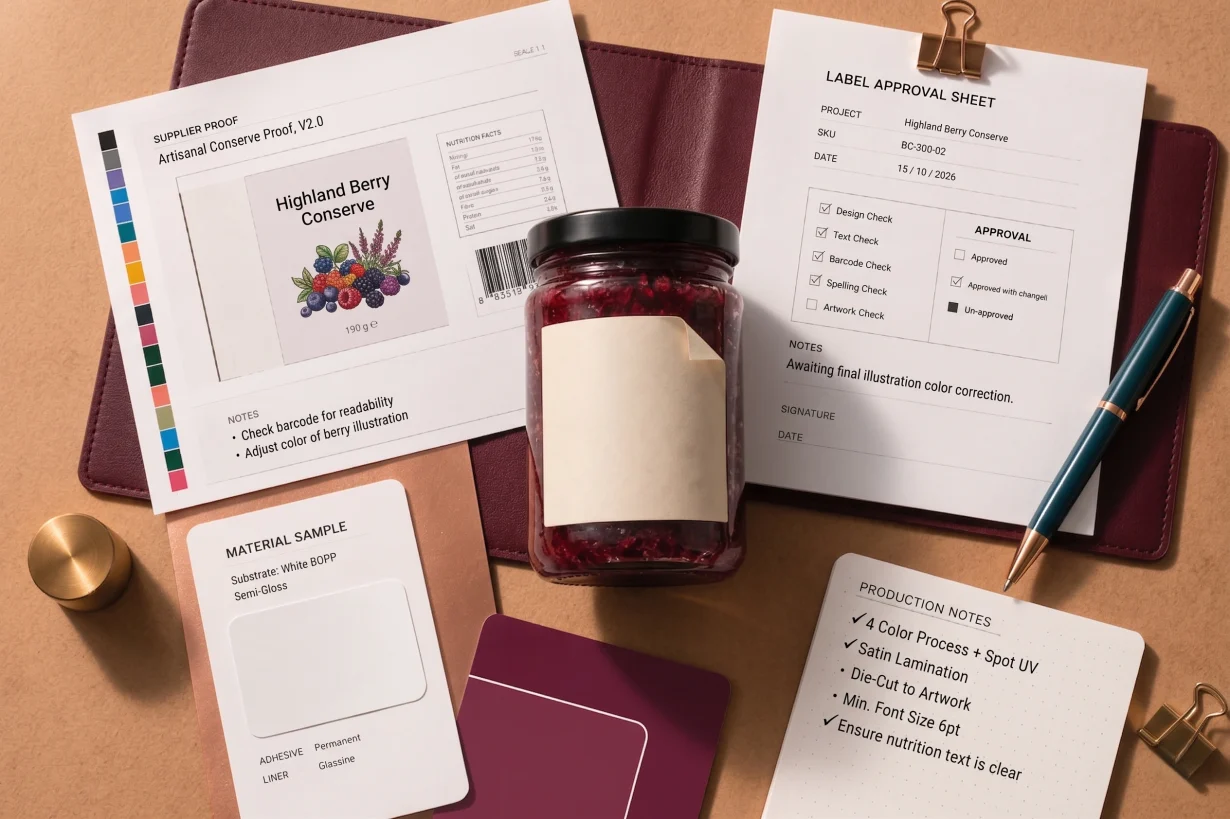

- What this coversWhy proof approval and an office sample cover only two of the three stages, and how unstated line conditions cause a job to fail at the co-packer or in storage.
- Who this is forBrand owners, operations managers and teams signing off on proofs and sample packets for products that run on automated filling lines or move through cold storage.
- Core findingApproval is three separate checks sharing one word: the file check, the look check and the line check. A proof settles the file and a desk sample settles the look, while the line check waits until production day.
- Bottom lineA label passes proof sign-off on what was specified on the sheet. It fails when the filling line or the storage environment brings conditions that were left out of the brief.
When the boxes arrive from the printer, nobody notices a problem. The proof looked right. Proof approval went through and the sample stuck to a jar on somebody’s desk. The pallets went straight out to the co-packer for the filling run.
The call comes later. It might come from the co-packer’s line manager on the morning the boxes are opened, because the rolls will not fit the unwind stand or the labels are feeding onto the bottles sideways. Or it arrives weeks down the line from a distributor whose product has been through cold storage and whose labels are lifting at the edges. Either way, when the paperwork gets pulled, the printed artwork matches the signed proof.
The file check, the look check and the line check
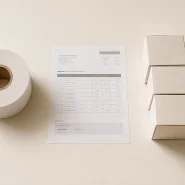
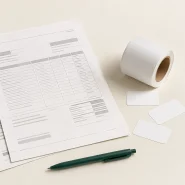
Buyers treat label approval as a single gate. On the production floor it splits into three, sharing one word between them: a file check, a look check and a line check. The PDF proof does the first. A sample stuck to a jar on a desk does the second. The third waits until the filling line starts, which is late to be finding anything out.
Those three names are mine. They describe a real gap between what a buyer signs off and what production needs, rather than a formal stage in anybody’s quality system.
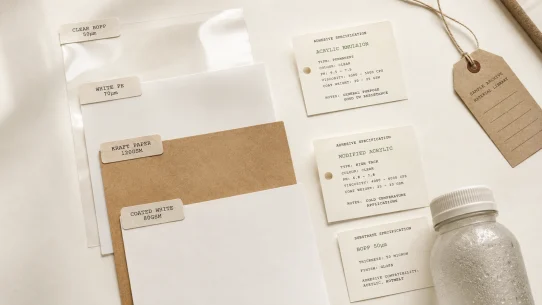
A sample is only worth what the printer actually put in the envelope, and packet contents vary by supplier. One assembled to show print quality and finish can carry a different facestock, adhesive or liner from the construction quoted for your job. A sample made from the quoted material and applied to your own container is better evidence, though it establishes appearance and initial adhesion on a clean, dry wall at room temperature and no more than that. No desk test reproduces applicator web tension, a cold or damp container wall or the storage that follows.
Ask the printer what the sample represents before you treat it as a production test.
| Approval stage | What it verifies | What it leaves untested |
|---|---|---|
| 1. The file check, the PDF proof | Copy, dimensions, bleed, die-line shape and color separations. | Whether the roll specification matches the applicator and whether the construction suits the container. Core size, roll diameter and wind direction can sit on the job specification or the purchase order rather than on the proof. |
| 2. The look check, the desk sample | Visual finish, paper or film texture and initial hand adhesion on a dry, room-temperature container. | Whether the sample matches the quoted construction, plus applicator feed, cold or damp container walls and the time the adhesive needs to bond. |
| 3. The line check, the production run | Whether the roll mounts on the spindle, indexes across the peel plate, wets out on the filled container and holds its edge. | An omission can cause a failure here, prompt a question from the floor or turn out not to matter on this particular job. |
Three places a label fails after proof approval
The gap between the file check and the line check is where hidden requirements live. They are operating conditions that feel like everyday context inside the brand’s building, so nobody writes them onto the quote request.
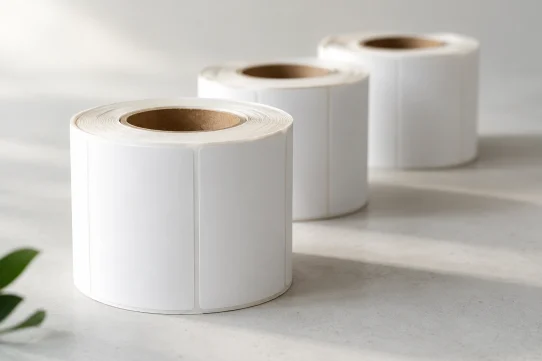
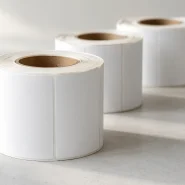
1. On the co-packer’s applicator. A proof shows the label face, and the roll build can sit somewhere else entirely. Core inside diameter, maximum roll outside diameter and unwind direction can live on a job specification or a purchase order that carries a sign-off of its own. Somebody who has signed the artwork has not necessarily read it.
Unwind direction names which edge of the label leaves the roll first and whether the printed face is wound to the outside or the inside. Charts number the eight combinations, and the number is worth something only when both parties read it off the same reference. Published charts do not agree, and the same position number can name a different leading edge at a different converter. Confirm three things against a diagram rather than a digit: which edge leads, which way the face winds and what orientation the applicator needs.
An applicator finds each label by sensing the gap between labels on the liner, which is how it knows where the next one starts. With a clear film label on a clear liner, an optical gap sensor may not have the contrast to detect it reliably. Some applicators carry a physical sensor instead and others need a registration mark printed on the liner. Which one applies depends on the sensor, the full label construction and the machine settings, so confirm it with the co-packer before the job is printed.
The procurement toolkit. Send this to the printer before production. “Please confirm the final roll build, specifically core ID, maximum OD and the unwind orientation diagram, matches the attached technical sheet from our co-packer.”
2. At the filling line and in cold storage. A sample that sticks in a warm office can still fail once the product reaches a cooler or a freezer, and the reason sits at application rather than on the freezer rack.
Two temperature figures do different jobs here, and Avery Dennison defines each one separately. Minimum application temperature describes the conditions a label can go on in, while the service temperature range describes what the applied construction withstands afterwards. A material rated for low service temperatures can still fail if it goes onto a cold or damp container wall, because the adhesive does not wet out the surface to begin with. How much of that applies to your job depends on the adhesive grade, the substrate and the exposure that follows, which is the subject of why adhesives fail on refrigerated and frozen products.
The procurement toolkit. Put the line conditions into the quote request itself, with your own numbers in the brackets. “Label application runs at [temperature] and containers may carry surface condensation. The product moves to cold storage at [temperature] within [hours] of filling.”
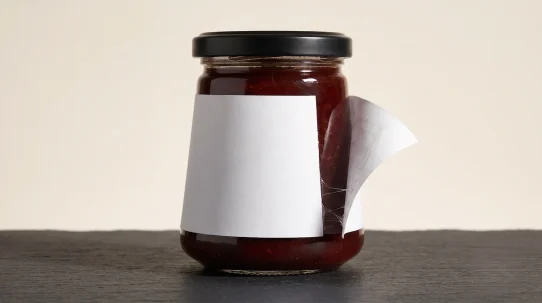
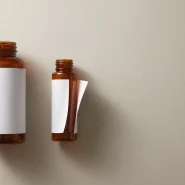
3. Across the container shape, days later. A desk check is over in an afternoon. What happens next takes days, as a stiff film or a heavy paper facestock wrapped around a small diameter or a container taper keeps working against the curve. Where the wall is low-surface-energy polyethylene or polypropylene, or where a rectangular label wraps onto a tapered jar, the edge bond can give way after the cases are sealed, which is covered in why labels peel off bottles at the edges.
The procurement toolkit. Replace the word bottle in your sourcing brief with the actual thing. “The container is a [tapered or straight] wall in [HDPE, PP, PET or glass]. Label dimensions should account for facestock springback against this diameter.”
Why suppliers cannot catch what the brief leaves out
A brand team lives with its own refrigerated product or its own wrap-around labeler, and that machine is the center of the operation. At the estimating desk the job arrives with whatever the buyer supplied. Where the brief leaves application conditions or roll requirements open, a supplier may quote against its usual construction, come back with questions or leave the decision until later. The risk is that both sides believe the job is fully specified while working from different assumptions.
Where to lock the specification
Turning the line check into part of the quoting process happens before the proof is drawn. Share the co-packer’s applicator specification sheet, the unwind diagram and the actual filling and storage conditions upfront, and the printer can pair the construction to the line and send job-specific samples for testing on filled containers.
Before you request a quote
- What you are solvingPutting container resin, application temperatures, storage conditions and roll specifications into the quote request so the printer selects the right construction upfront.
- The document that holds itThe supplier brief is where internal product context becomes a print specification.
- Read nextWhat a label supplier brief should contain before you request a quote
When labels are already lifting
- What you are solvingIsolating whether the failure came from application timing, container geometry or adhesive transfer before anybody quotes a replacement material.
- The evidence to keepTime to failure, a comparison container that holds and the physical failed bottle tell the supplier what a photograph cannot.
- Read nextHow to diagnose a label failure from what is already on your shelf
FAQ
Why do labels pass proof approval and still fail in production?
A proof checks the artwork. Whether it also covers the roll build depends on the printer, and nothing in a proof process guarantees that anybody asked whether the adhesive suits your filling conditions. Those questions can stay open until the line runs.
Does a label proof cover the roll specification?
Not necessarily. Core inside diameter, maximum roll outside diameter and unwind direction can sit on a job specification or a purchase order rather than on the proof sheet. Ask your printer which document carries the roll build, then confirm it against the co-packer’s applicator specification before the run.
Can I trust the sample packet a printer sends?
Check what it represents. Packet contents vary by supplier, and one assembled to show print quality can carry a different facestock, adhesive or liner from the one quoted for your job. Ask for a sample made from the quoted construction when adhesion matters.
Why did a sample stick in our office and fail in cold storage?
An office sample goes onto a dry container at room temperature and sits undisturbed while the adhesive wets out the wall. A filling line can present a cold or damp container instead, and an adhesive that has not wetted out the surface has little to hold with later. A low service temperature rating does not establish that the label can be applied under those conditions in the first place.
Before you act
Material capability, adhesive performance and applicator requirements vary by supplier, substrate, container and equipment. Confirm the points here against your own printer and co-packer, and run a physical test on your own line before committing a production run. This article does not contain affiliate links.