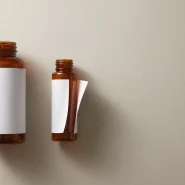
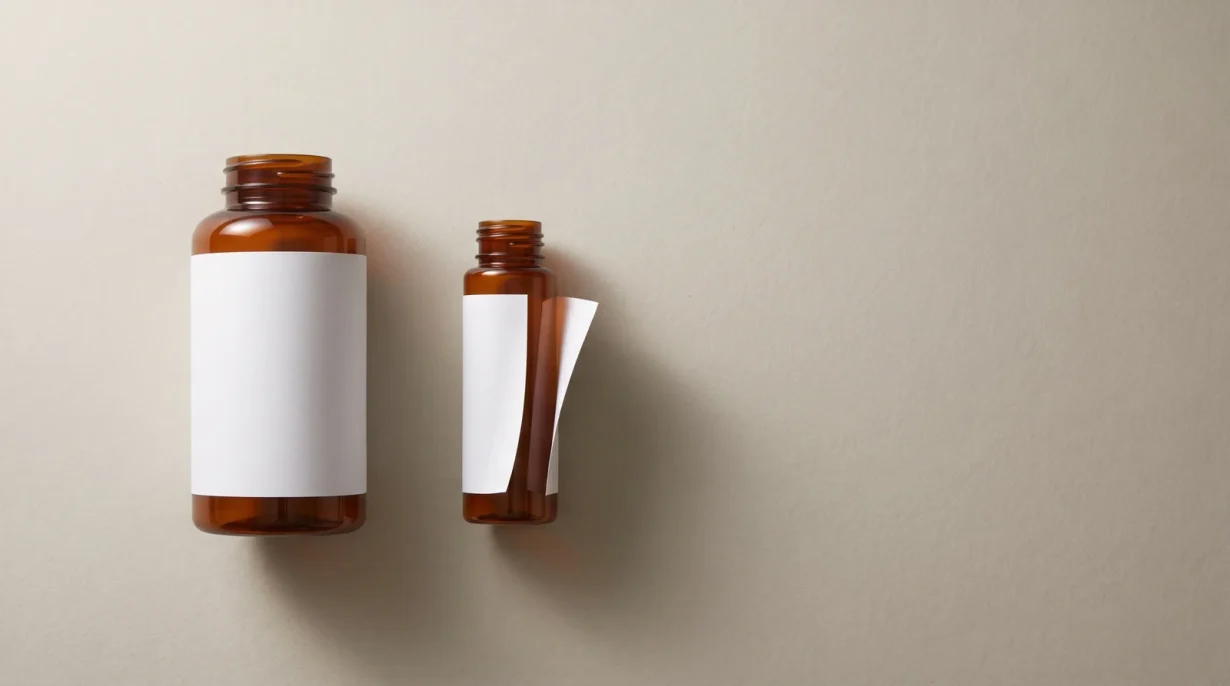

Labels are coming off. Before anyone quotes you a new material, there are three questions worth answering, and you can answer all three from what is already sitting on your shelf.
When it let go. Which of your other containers are fine. Where the adhesive stayed.
None of the three is in the photograph you were about to send, and none of them will arrive from your suppliers. A label failure can cross the line between two of them. The printer sold you the label. Someone else sold you the container. Each is answerable for their own product, and neither one has seen the two working together on your line. Where a failure comes out of that interaction, nobody is standing on both sides of it, so gathering the evidence falls to you.
1. When did it let go?
The interval between application and the first sign of failure does not identify the cause. It establishes the first distinction worth investigating: did the label fail to develop enough initial adhesion to stay in place, or did it hold and then lose adhesion later?
Those two send you to different starting questions, and running them in the wrong order costs weeks.
It never appeared to stick. Start with the surface and the moment of contact. What was on the container, what temperature it was, whether it was wet and how much pressure sat behind the label.
It held for hours. Adhesion builds over time rather than arriving at full strength on contact. Avery Dennison’s adhesives glossary defines dwell time as the period an adhesive needs to reach ultimate adhesion and gives a range of twenty minutes to twenty-four hours depending on conditions. That is a range, not a timetable for every construction, so record how the labels were handled in the hours after they went on and how soon the cartons moved.
It held for days, then lifted at an edge. Look at the container shape, the label construction and where the lift began. On a tight curve the construction can keep working against the edge. The timing tells you the bond held through application and handling, which is a smaller statement than saying the shape caused the failure.
It held for weeks. Record what changed around the label. Temperature, moisture, handling, product contact, where the stock was stored. Then check whether the original specification ever covered that environment, because a late failure can be a late-arriving condition or a material that was never right for the conditions it would eventually meet.
Record the timing before anyone proposes a material change. It sets your order of investigation, and a long hold does not acquit any single cause on its own.
2. Which of your other containers are fine?
This is a comparison you may already own without running a trial.
Suppose the 60ml bottle is lifting and the 500ml bottle is holding. The useful work is not concluding that small bottles are the problem. It is writing down what the two jobs share and what they do not.
Shared might be the resin, the label construction, the print run, the applicator and the room. Different will be the diameter, and probably also the label dimensions, where the label sits on the container, how the container deforms when someone picks it up and how much pressure an applicator can put behind a smaller face.
Compare the two jobs line by line. What differs is a candidate to investigate, not a cause, and where several things differ at once the comparison cannot tell you which one mattered. What it can do is narrow the field to things you can name.
A container that works is evidence. It is not proof that the construction suits every size in your range.
When a new material is proposed, the question to put to the printer is which of the differences on your list the change is meant to address, and how either of you will know whether it worked.
3. Where did the adhesive stay?
Take a failed label off carefully and look at both halves. Record what you see before you interpret it.
Adhesive mainly on the container. Adhesive mainly on the label, with the container wiping clean. Adhesive on both.
Each pattern sends you to a different question and none of them answers one. What stays on each side is affected by the adhesive, the label construction, the container surface and the way the label came off, so treat the pattern as a record of what you observed rather than a verdict on why it happened.
Note which edge moved first as well. A lift beginning on the vertical seam where the label wraps is a different question from one creeping in along the top or bottom.
Then keep the label and the container. Not a photograph of them. A supplier can investigate things in the physical sample that no photograph carries, and once the bottle is in the bin the evidence is gone for good.
Five things to record before you report a label failure
Collect before the phone call
- Container material. Ask the container supplier for the resin rather than guessing it from the feel of the plastic.
- Application conditions. Container temperature, room temperature, whether the surface was wet or contaminated, line speed and applicator pressure as far as you know them.
- Time to failure. Whether the first sign appeared within minutes, hours, days or weeks.
- A comparison that works. Which other sizes or containers are holding, and what those jobs share with the one that failed.
- The failure pattern. Where the adhesive stayed and which edge moved first. Keep the failed label and the container.
These do not guarantee a diagnosis. They change the question you arrive with. A printer handed a photograph can offer you a different material and little else. A printer handed those five answers has something specific to work from.
Where to investigate next
It failed at or near application
- What you are looking atA chilled or frozen product, condensation on the container or a surface colder than the adhesive could grab.
- The distinction that mattersThe conditions a label is applied in and the conditions it has to survive afterwards are two different specifications.
- Read nextThe cold chain label problem: why adhesives fail on refrigerated products
It held, then lifted at the edges
- What you are looking atSmall, tapered or squeezable containers losing a corner while larger sizes hold.
- The distinction that mattersContainer shape and label construction work against each other, so the adhesive is not the only variable in play.
- Read nextWhy labels peel off bottles at the edges
Independence
Label & Bind is an independent packaging procurement resource for US small businesses. We do not sell labels and we accept no printer or material supplier referral fees.