

This article does not contain affiliate links.
WHAT THIS COVERS
Why labels that pass approval, sample testing and initial production can still fail once they reach real-world operating conditions, and what brands typically miss when briefing a label supplier.
WHO THIS IS FOR
Brand owners, operations managers and teams sourcing labels for products that move through cold storage, temperature variation, automated application or unusual environmental conditions.
CORE FINDING
Most production failures do not begin on the press. They begin in the brief, when critical operating conditions are never communicated to the supplier.
BOTTOM LINE
A label passes approval based on what was specified. It fails when reality includes conditions nobody mentioned.
Nobody notices a label problem when the labels arrive.
The proof looked right. The colors looked right. The labels apply without issue at the co-packer. The pallets leave the facility.
The phone call comes later. Usually from a retailer. Sometimes from a regional category manager who has been getting complaints. Almost always with the same opening sentence: “We have a problem with your labels.”
The first instinct is always the same. Blame the printer. Cheap adhesive. Bad batch. Something the supplier did wrong.
The investigation rarely points to the press.
A label passes approval based on what was specified. It fails when reality includes conditions nobody communicated to the supplier. This sits at the root of many expensive packaging failures.
How Labels Actually Get Approved
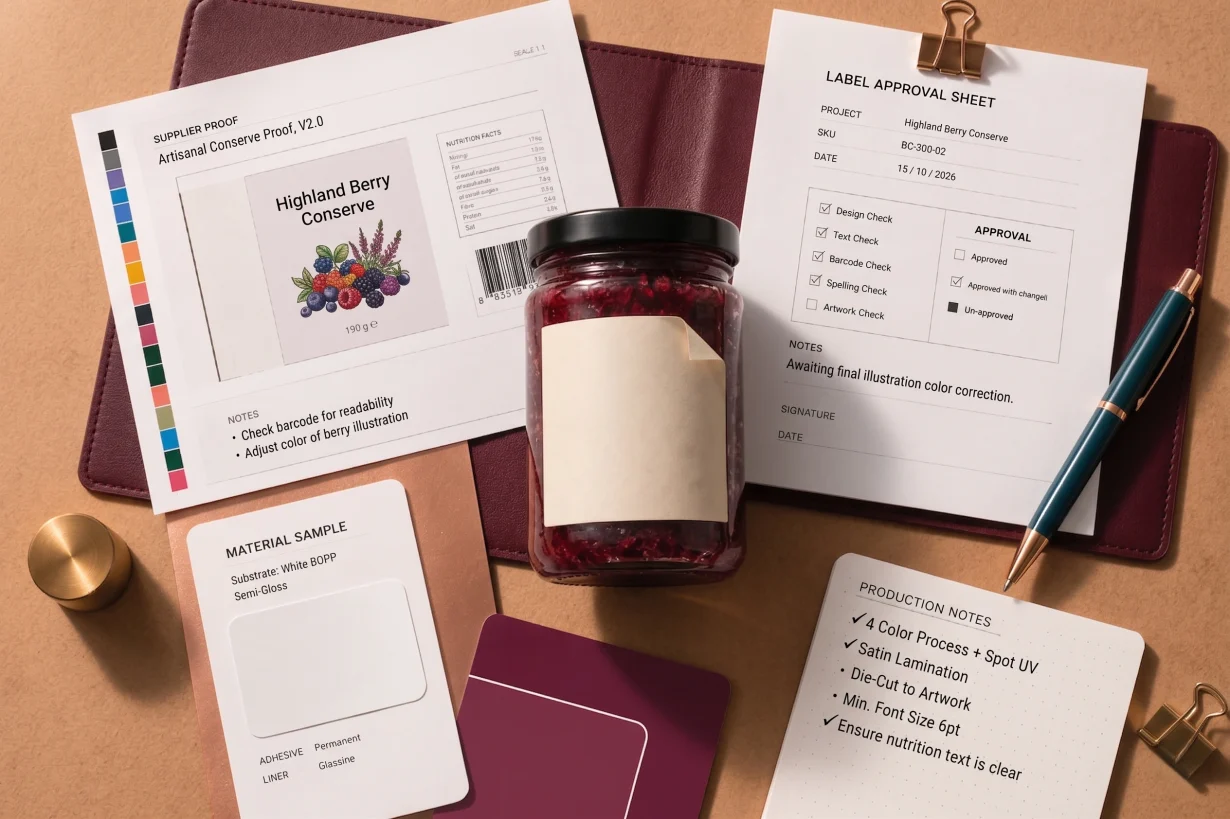
Most label approval processes check the wrong things. The brand reviews artwork. The supplier confirms dimensions, quantity and material. The proof gets signed off. A press check happens, sometimes. The labels go into production.
What does not happen in that workflow: a conversation about where the label will live, what conditions it will face, how it will be applied and what happens to it across its lifecycle. Those conditions are assumed rather than specified. The assumption is that the standard configuration will work for whatever the brand is doing.
That assumption is correct most of the time, which is exactly why the failures are so painful when they happen. Brands stop checking for them.
The Freezer Adhesive Pattern
Cold storage is the cleanest illustration of how this plays out because the failure timing is so predictable.
The labels often look perfect at the beginning. Application goes smoothly. Inventory leaves the facility. The problem appears later, after the product has spent time in cold storage. At that point the adhesive is operating in conditions it was never selected for. Standard permanent adhesives are formulated for ambient temperatures. In cold storage the tack reduces, condensation forms between the adhesive and the substrate, and the label edges start to lift.
Industry organizations like TLMI (Tag and Label Manufacturers Institute) and FINAT establish standard testing protocols for adhesive performance across temperature ranges. Cold-temperature performance is its own specification. Standard permanent acrylics are not certified for sub-zero environments. The brands that hit this failure pattern are not buying defective labels. They are buying labels that were specified for the wrong environment.
The Investigation Always Reveals the Same Thing
When a production failure gets investigated properly, the root cause is almost never on the press. The press produced what was specified. The material was the material that was ordered. The adhesive was the adhesive that was approved. The application went the way it was supposed to go.
What failed was the specification. The brief was incomplete. Critical operating conditions were never communicated, so they were never factored into the supplier’s material choices or production setup.
We have seen versions of this conversation many times. A brand spends weeks comparing label prices and artwork proofs, then discovers after launch that nobody mentioned freezer storage during the quoting process. The supplier did not ask because the brief did not raise the question. The brand did not specify because it seemed obvious from the inside of the business.
It only seems obvious from one side of the conversation.
Nobody budgets for relabeling inventory that is already packed and ready to ship. Nobody expects warehouse staff to stop what they are doing and manually replace labels that looked perfectly acceptable a week earlier. That is why these failures become expensive so quickly. The unit cost of the original labels is rarely the painful number. The painful number is the rework cost layered on top of brand reputation damage with the retail partner.
The Pattern Has a Name
The labels do not fail because they were printed incorrectly. They fail because important operating conditions were never communicated.
We call this the Hidden Requirements problem. Once you start looking for it, the same pattern appears behind many packaging failures that initially seem unrelated.
THE HIDDEN REQUIREMENTS
The five categories of unstated conditions that most often cause production failures:
☐ Storage Environment: Will the labeled product spend time in cold storage, freezer, refrigerator, ambient warehouse, outdoor or temperature-cycling conditions before sale?
☐ Application Method: Will the label be applied by hand, by semi-automated equipment, by high-speed automated line, on a curved or tapered surface or on a textured substrate?
☐ Substrate Compatibility: Is the container polypropylene, polyethylene, glass, metal, paper or recycled material? Surface energy varies and adhesives are not universal.
☐ Regulatory Context: Does the product require food-contact certification, child-safety language, multilingual requirements or country-of-origin claims?
☐ Lifecycle Conditions: Will the labeled product face UV exposure, moisture, abrasion, temperature cycling between freezer and shelf or contact with oils and solvents?
A complete supplier brief addresses each category explicitly. Most briefs address one or two and leave the rest to assumption.
Why Smart Teams Still Miss This
The problem is not carelessness. Most teams buying labels are focused on the visible decisions: artwork, dimensions, finishes, lead times and pricing.
The conditions that matter later often feel obvious to the people closest to production. They are invisible to everyone else. A freezer requirement seems obvious once labels start lifting. It does not seem obvious when someone is filling out a quote request form.
Brand owners and operations managers are usually working with limited time, multiple vendors and competing priorities. The supplier brief is one document among dozens. The hidden requirements are the kind of details that get assumed rather than specified, because at the moment of the quote, they do not feel like specifications. They feel like context. Context that everyone in the building knows.
The supplier does not work in the building.
Most hidden requirements feel like context, not specifications. That is why they disappear from the brief.
The most expensive Packaging Lessons mistake is assuming the supplier will catch what the brief left out. Suppliers quote and produce based on what they are told. Conditions that are not mentioned are not factored into the material choice, the adhesive specification or the production setup.
Why Suppliers Cannot Catch What Buyers Do Not Say
A common assumption among brands is that the supplier should know to ask. If freezer storage matters, surely the printer will check? If automated application is planned, surely the converter will request specifications?
In practice, suppliers default to the most common configuration unless told otherwise. A small label printer working with thousands of brands cannot interrogate every customer about every possible operating condition. They quote and produce based on what is in front of them. Standard adhesive. Standard liner. Standard material. Standard rewind direction.
When the brief specifies “permanent adhesive,” the printer reasonably assumes ambient conditions. When the brief specifies a label size and material, the printer reasonably assumes manual or standard automated application. The supplier is not failing to do their job. They are doing exactly the job that was specified.
This is exactly why the specification process is so critical. The framework covered in What a Label Supplier Brief Should Contain Before You Request a Quote is not just a way to get an accurate price. It is the only document where hidden requirements become visible.
How to Prevent Hidden Requirements Failures
The prevention is unglamorous: a complete brief that explicitly addresses each category of hidden requirements before the supplier quotes. This is not about adding bureaucracy. It is about ensuring the supplier has the information needed to recommend the right material configuration.
HIDDEN REQUIREMENTS CHECKLIST: BEFORE THE QUOTE
☐ Storage Environment: Specify whether the labeled product will be stored at ambient temperature, refrigerated, frozen, outdoor or in conditions that cycle between ranges. State the temperature range explicitly.
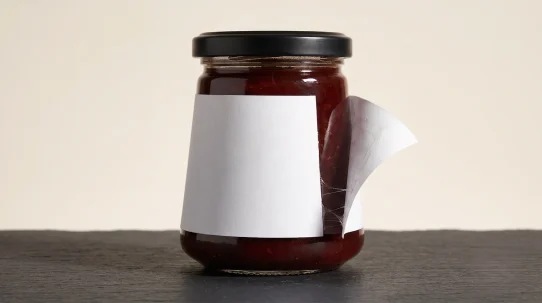
☐ Application Method: Specify whether application will be manual, semi-automated or high-speed automated. State the line speed if known, the application surface curvature and any unusual surface conditions. Container taper matters here, because a rectangular label cannot sit flush on a cone.
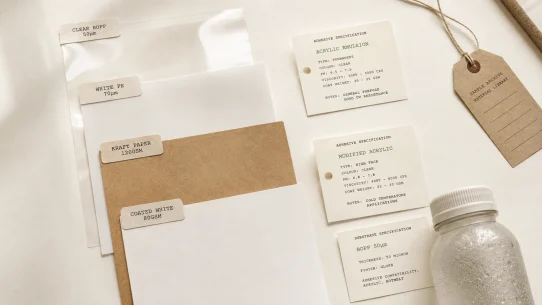
☐ Substrate: State the exact container material. Not just “plastic” but the specific resin where possible. Polypropylene, polyethylene and PET have different surface energies and require different adhesives.
☐ Regulatory Requirements: State whether the product requires food-contact certification, claim substantiation, language requirements for export markets or any other regulatory criteria that affect material choice.
☐ Lifecycle Exposure: State whether the labeled product will face UV exposure, moisture contact, abrasion, freeze-thaw cycling or contact with oils.
The brief that addresses each of these categories is the brief that gets the right material recommendation. The brief that leaves them blank is the brief that produces a Hidden Requirements failure later. For the full supplier brief framework, What a Label Supplier Brief Should Contain Before You Request a Quote integrates these categories into the broader procurement workflow.
Production economics, material capabilities and adhesive performance vary by supplier, substrate, environmental conditions and application equipment. Always consult with your packaging supplier before making final material decisions.
Why do labels pass approval and still fail in production?
Most label approval processes check artwork, dimensions and material specification. They do not check whether critical operating conditions like storage environment, application method, regulatory requirements and lifecycle exposure have been communicated to the supplier. A label passes approval based on what was specified. It fails when reality includes conditions that were never mentioned in the brief.
What is the most common Hidden Requirement that causes label failures?
Storage environment is the most common. Brands frequently brief labels for products that will move through freezer or refrigerated storage without specifying the temperature conditions. Standard permanent adhesives are formulated for ambient temperature performance and lose tack below freezing. The failure manifests weeks after application, when product has been in cold storage long enough for the adhesive to deaden.
Whose fault is it when a label fails because of missing brief information?
Operationally, neither the supplier nor the brand is fully at fault. The supplier produced what was specified. The brand specified based on incomplete understanding of what the supplier needed to know. The system failure is that the brief did not include the information the supplier needed to recommend the right material configuration. Prevention sits with both parties communicating earlier rather than assigning fault later.
Can a label supplier catch missing information before quoting?
Sometimes, but not reliably. Suppliers work with thousands of brands and cannot interrogate every customer about every possible operating condition. They default to the standard configuration unless told otherwise. The brand is in the best position to know its own operating context. The brief is the document where that context becomes visible.
What are the Hidden Requirements categories that brands should specify before requesting a label quote?
Five categories: storage environment (ambient, refrigerated, frozen, outdoor or temperature-cycling), application method (manual, semi-automated, automated line speed and surface conditions), substrate (specific container material and surface energy), regulatory context (food-contact, claims, export language) and lifecycle exposure (UV, moisture, abrasion, freeze-thaw, oil contact). A complete brief addresses each category explicitly.