
Quick summary
What This Covers. What happens to a label order between proof approval and the press, and where a late change actually starts costing something.
Who This Is For. Anyone who has approved a proof and then realized something needs to change.
Core Finding. Approval is not the boundary. The job stops being information and becomes material somewhere after it, and that point moves depending on what the shop has already done.
Bottom Line. The question is not whether you are too late. It is how far the job has traveled since you signed.
The answer everyone gives
Search for how to change label artwork after approval and you get the same reply from almost every printer. Changes are free until you approve the proof. After that, call right away, expect a fee, and if it has printed you are paying for a reprint.
That is a fair summary of most terms of service. It is also a description of a contract rather than a factory.
The contract says approval is the line. The factory says something else. Between the moment you sign and the moment ink meets material, a job passes through several stages, and a change costs a different amount at each one.
What happens after you sign
Approval releases the job. It does not print it.
The file gets locked to a version. Prepress imposes it in a step and repeat layout, arranging the labels across the width of the master roll so the material gets used efficiently. The artwork is ripped into something the press can read. Tooling comes out of the library, or gets ordered if the shape is new. The warehouse allocates material and, on many jobs, slits the master roll down to the web width the press needs. The job takes a slot in the production schedule. Inks get mixed. Then the operator sets up, runs a first piece and checks it against your proof.
None of that is secret. What nobody tells you is which of those steps can be undone cheaply and which cannot. It is also why a proof does not show you everything about the finished label, since several of those stages happen after you have signed.
A job that stopped one stage short
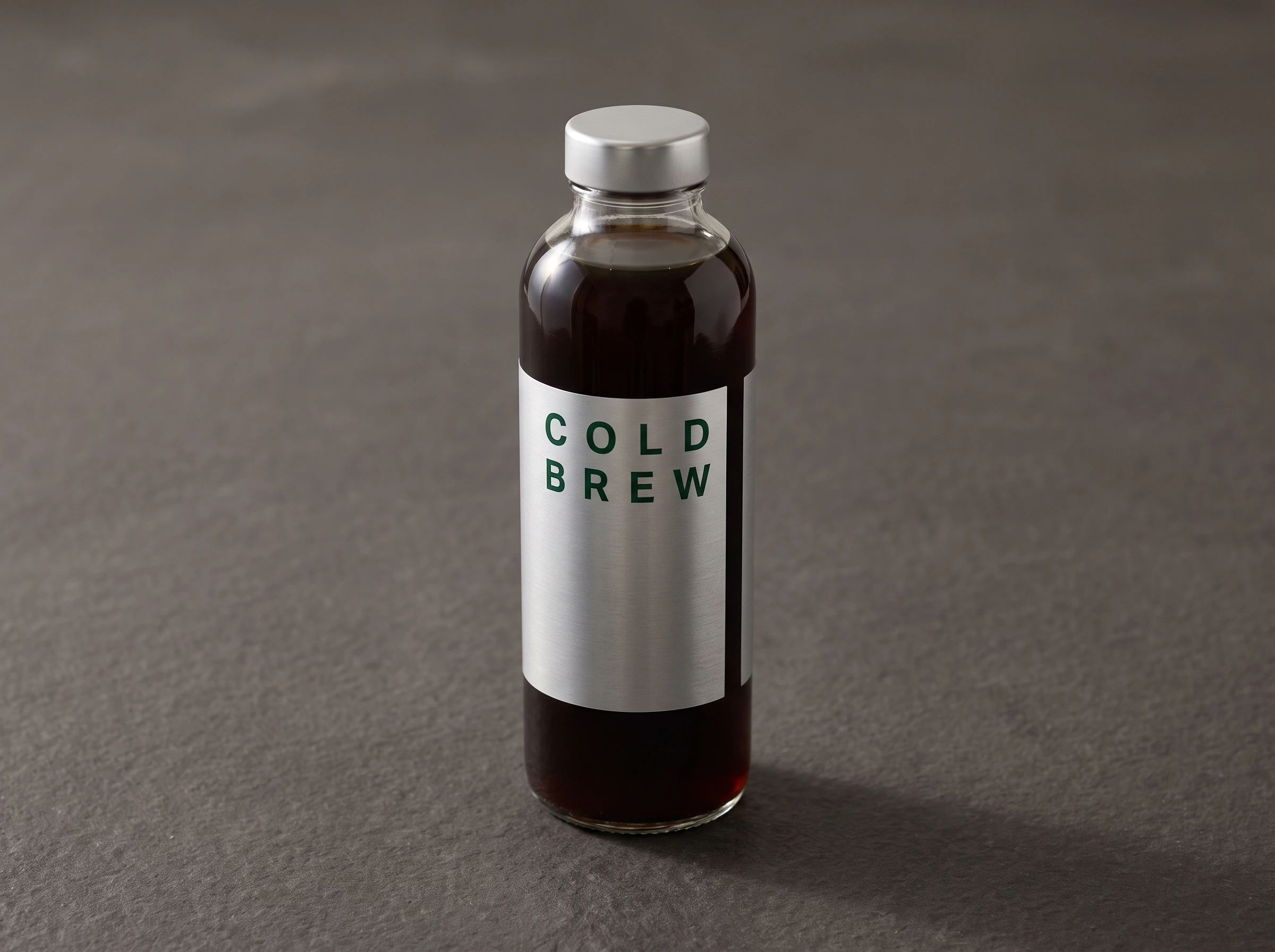
A cold brew coffee brand ordered 25,000 wrap labels. Silver BOPP, matte laminate, 7 by 3 inches, four color process over a spot white base, custom die line. They approved the soft proof and the job went into the schedule for the following morning.
36 hours later they called in a panic. Their glass supplier had run out of 32oz bottles and substituted a 30oz for the current filling run. The barcode and the net weight on the front of the label were now wrong.
By the time the account manager reached the floor, prepress had finished the step and repeat imposition. The artwork was ripped and sitting on the print server. The warehouse had pulled the master roll, slit it to web width and staged it on a pallet beside the machine.
The operator had not fed the web. We stopped the job and pulled it from the morning queue.
One thing saved them. The substitute bottle had the same base diameter as the original. Only the height and the neck taper changed. A 7 inch label on a bottle that size is a partial wrap, so it still applied without wrinkling or lifting at the edges, and the 3 inch height still sat inside the straight wall of the shorter bottle. The die line file did not change, and the magnetic die we already had covered it.
Had the diameter changed, the label would have needed a different size, and a different size means new tooling before anything can run.
What it actually cost
No material was wasted. Nothing had printed. There was no reprint bill.
They sent revised vector files. Prepress rebuilt the spot white layer, dropped the new file into the layout, ripped it again and issued a fresh proof. We waited for a new signature before moving.
And they lost their slot. The ship date moved back 3 days, and we pulled another client off the waitlist to keep the press running that morning.
That is the outcome nobody describes. Not free, and not a disaster. Caught in time and still expensive, because what cost them was never the material. It was a place in the queue.
Where the line actually sits
The contract draws it at your signature. The floor draws it somewhere else, and the position moves with the job.
Before anything is imposed, a change is close to free. The file is still just a file.
After imposition and ripping, prepress has done work that now has to be done twice. It costs time rather than material, and on a busy week time is the scarce thing.
After tooling, it depends entirely on what changed. A barcode change is nothing, and a request to change label artwork after approval is usually this kind of change rather than a tooling one. A die line change is a new cutting tool, and the process matters here too, since plates make a change more consequential than a digital job does.
After material is pulled and slit, that roll belongs to your job at your web width. Nothing is destroyed, but it is no longer general stock.
After the web is fed, you are paying for whatever has run.
Approval sits before every one of those. That is why it is the wrong line to worry about.
What to ask instead
Where is my job right now. That question gets you a useful answer. Asking whether it is too late only gets a yes or a no, and neither one tells you what the change will cost.
Has the material been slit. Buyers almost never ask this, and it is the question that separates a change that is annoying from a change that is awkward.
Am I still in the schedule. A job that leaves the queue does not rejoin it where it left. That is usually the real cost.
Does this change touch the die line. A barcode after proof approval is an artwork change. A dimension is a die line change, which means tooling. Those are different problems, and the second one is the expensive one.
The organizational half
The changes that arrive after approval are rarely technical failures. They are organizational ones.
Somebody forgot a required statement. Somebody lived with the artwork for three nights and stopped liking it. New information came in from a supplier, a retailer or a regulator that nobody could have had at proof stage. In this case a glass supplier ran out of bottles, which is not something the brand did wrong.
None of that is avoidable by being more careful. What is avoidable is not knowing what happens next, which is the thing that turns a manageable change into a scramble. Much of it also traces back to information that should have reached the printer in the brief, before anything was scheduled.
Where this leaves you
When something changes after you have approved
- Call rather than email, because the job is moving while you type
- Ask where the job is, not whether you are too late
- Ask specifically whether material has been pulled and slit
- Ask whether the change touches the die line or only the artwork
- Ask what happens to your slot, and get the new date in writing
- Send the revised files ready to use, not a description of the change
Approving a proof does not freeze a job. It releases one.
The useful thing to know is not where the deadline was. It is how far your job has traveled since you signed, and that is a question a printer can answer in about ten seconds.
Production economics, crossover points and material capabilities vary by supplier, equipment, order quantity and job specifications. Always consult with your packaging supplier before making final procurement decisions.
FAQ
What happens after I approve a label proof?
Approval releases the job into production but does not print it. The file is locked, prepress imposes it and rips it, tooling and material are allocated, and the job takes a slot in the production schedule. Printing happens at the end of that sequence, not the start.
Can I change a barcode after proof approval?
Whether you can change label artwork after approval depends on how far the job has moved. A barcode is an artwork change and prepress can handle it. What decides the cost is what has already happened: whether the file has been imposed, whether material has been pulled and slit, and whether you lose your production slot.
Does changing label size require a new die?
Usually. Dimensions are tooling rather than artwork, so a size change generally means a new cutting die and time to make it. A change that keeps the same die line, like text or a barcode, is a much smaller problem.
When is it too late to stop a print job?
The practical answer is when the web has been fed and the press is running. Before that the job can usually be pulled, though pulling it costs the production slot even when no material is wasted. Call rather than email, because the job moves while you are typing.
How do I avoid changes after approval?
Most late changes are organizational rather than technical. Confirm the things that come from outside your own desk before approving: container specifications from your supplier, regulatory statements, retailer requirements and barcodes.